High protein snacks are one of the simplest ways to feel satisfied between meals without much planning or fuss. A little protein at snack time tends to keep hunger on an even keel, so you arrive at your next meal feeling calm rather than famished. This guide gathers 15 genuinely useful ideas, from creamy Greek yogurt to crunchy roasted chickpeas, alongside a handy comparison table and simple prep tips you can fold into an ordinary week. Everything here is general, everyday guidance meant to make snacking a little easier and a lot more enjoyable.
Table of Contents
Why Protein Helps You Feel Full
Protein has a reputation for being filling, and there is good reason for it. Of the three main macronutrients, protein tends to be the most satisfying gram for gram, which is why a small protein-rich bite can take the edge off hunger in a way that a handful of plain crackers often cannot.
Part of the reason is pace. Protein generally digests more slowly than simple carbohydrates, so the energy from a snack arrives gently rather than all at once. That steadier release can help you feel comfortable for longer, which makes it easier to walk past the mid-afternoon vending machine without a second thought.
According to the Harvard Nutrition Source, protein is a building block for muscle, bone, skin and much more, so a snack that includes some is quietly useful beyond simply curbing hunger. Individual needs vary widely, though, so treat this as general background rather than a personal plan.
It also helps to remember that no single nutrient does everything on its own. Protein works best as part of a varied plate that includes vegetables, fruit, wholegrains and healthy fats. A protein-rich snack is one useful piece of that bigger picture, not a shortcut and certainly not a rule you have to follow.
On a busy day, that steadier feeling can be the difference between a calm afternoon and a scramble for whatever is nearest. When you know a satisfying option is within reach, snacking becomes a small, pleasant part of the day rather than an afterthought. That is really the whole aim here: making the easy choice the enjoyable one.
What Counts as a Protein-Rich Snack
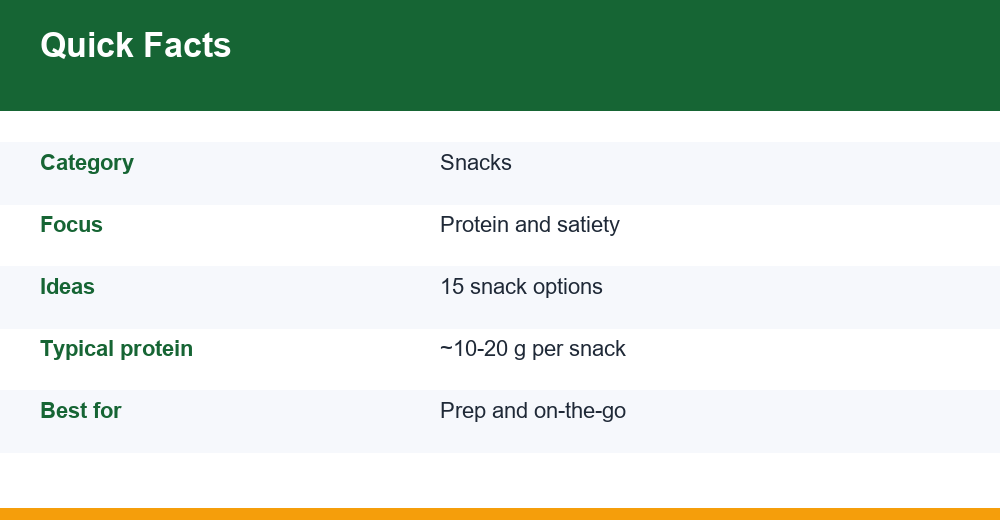
There is no official cut-off, but a helpful rule of thumb is to look for snacks offering roughly 10 to 20 grams of protein. That range suits many adults and leaves plenty of room to scale up or down depending on your appetite, your activity and how far away the next meal happens to be.
The exact number matters less than the habit. Even a snack with 7 to 10 grams counts for something, especially when you pair it with a little fibre from fruit or vegetables. That gentle combination of protein and fibre is often what keeps hunger quiet for an hour or two.
- Lean toward whole foods where you can, such as eggs, yogurt, beans and nuts.
- Treat packaged bars as handy backups rather than everyday staples.
- Keep an eye on very high added sugar or sodium, which can quietly creep into some processed options.
Reading the label is a small habit that pays off. A glance at the protein and sugar figures, plus the serving size, tells you most of what you need to know. There is no need to be strict about it; simply choosing the option that leaves you fuller and happier is usually a good sign you have picked well.
Convenience matters as much as content. The best snack is frequently the one you will actually eat, so a slightly lower-protein option you genuinely enjoy beats a high-protein one that sits forgotten at the back of the cupboard. Keep a small variety on hand and let the moment decide.
15 High Protein Snacks Worth Keeping Around
Here is the heart of the guide: 15 high protein snacks that are easy to find, easy to prepare and genuinely satisfying. The protein amounts below are general estimates for a typical serving, since brands and portion sizes vary a great deal. Use them as a rough guide, not as exact macros to track.
Dairy and Egg Options
Dairy and eggs are among the most reliable protein sources you can keep on hand, and most need little more than a spoon.
- Greek yogurt is thick, creamy and quietly one of the most filling choices around; a single-serve tub usually lands in the mid-teens for grams of protein.
- Cottage cheese has made a welcome return; spoon it plain or top it with fruit, herbs or a little honey.
- Hard-boiled eggs travel well and need zero fuss once cooked, and two of them make a tidy snack.
- A string cheese or a small wedge pairs beautifully with fruit or wholegrain crackers.
Nuts, Seeds and Legumes
Nuts, seeds and legumes bring protein with a satisfying crunch and a helpful dose of fibre and healthy fats.
- Roasted chickpeas deliver a crunchy, savoury hit along with fibre that supports fullness.
- Edamame, whether steamed from frozen or dry-roasted, is a fun, poddable option.
- A small handful of almonds, pistachios or peanuts brings protein plus healthy fats.
- A spoon of nut butter with apple slices is a classic sweet-and-savoury pairing.
- Pumpkin seeds add welcome crunch to yogurt, salads or a quick homemade trail mix.
Portable and Prepared Picks
For snacks you can grab and go, a few shelf-stable and make-ahead picks are worth keeping in rotation.
- Tinned tuna or salmon on wholegrain crackers is quick, shelf-stable and satisfying.
- Hummus with vegetable sticks or a little wholegrain pitta keeps things fresh and dippable.
- A slice of wholegrain toast with a boiled egg or cottage cheese works as a mini meal.
- Roasted soy nuts offer a crunchy, plant-based option.
- A modest bowl of skyr or kefir suits anyone who likes something spoonable and tangy.
- A sensibly chosen protein bar can rescue a busy afternoon when nothing else is to hand.
Prefer to see it at a glance? The table below sorts a selection by rough protein content and typical prep time.
| Snack | Approx. protein | Prep time |
|---|---|---|
| Greek yogurt (single tub) | ~12-18 g | None |
| Cottage cheese (small bowl) | ~12-14 g | None |
| Tinned tuna (small can) | ~15-20 g | 2 min |
| Two hard-boiled eggs | ~12 g | 10 min batch |
| Edamame (half cup) | ~8-9 g | 5 min |
| Roasted chickpeas (half cup) | ~7-8 g | 25 min batch |
| Nut butter + apple | ~7-8 g | 2 min |
Reading the table, you will notice that the quickest wins often need no cooking at all, while a couple of batch jobs pay you back across several days. Mixing a few no-prep options with one or two make-ahead staples tends to keep things varied without adding much effort to your week.
Simple Protein-Rich Pairings
Some of the most satisfying snacks are really just two friendly ingredients put together. Pairing a protein source with a little fibre or healthy fat adds flavour, texture and staying power, so the snack feels like more than the sum of its parts.
- Greek yogurt with berries and a sprinkle of seeds.
- Apple or pear slices with a spoon of nut butter.
- Cottage cheese with cherry tomatoes and cracked pepper.
- Hummus with carrot, cucumber and pepper sticks.
- Wholegrain crackers with tinned salmon and a squeeze of lemon.
None of these are rules. Snacking is meant to be flexible and enjoyable, so treat these as starting points and swap in whatever you actually like eating. A snack you look forward to is a snack you will happily reach for again, and that consistency tends to matter far more than any single perfect choice.
Plant-Based Protein Picks
You do not need meat or dairy to build satisfying high protein snacks. Beans, lentils, soy foods, nuts and seeds all bring meaningful protein to the table, often with a welcome dose of fibre alongside. That pairing is part of what makes plant-based options feel so comfortably filling.
Edamame, roasted chickpeas, hummus, soy nuts and a spoonful of nut butter are all reliable choices. Tofu, cubed and pan-crisped with a little seasoning, makes a surprisingly good savoury nibble too. If you are leaning fully meat-free, it can help to mix your sources across the week so meals and snacks stay varied and interesting.
Combining sources is easier than it sounds. A little hummus with wholegrain crackers, or a trail mix that blends nuts, seeds and a few soy nuts, naturally brings different plant proteins together in one bowl. You do not need to think too hard about it; simply eating a range of plant foods across the day tends to take care of the balance for you.
For a deeper look at building meals and snacks this way, our guide to plant-based protein walks through the best sources and how to combine them across a typical day.
Prep and Storage Made Easy
A little batch prep is what turns good intentions into real snacks sitting ready in the fridge. Set aside twenty minutes once or twice a week and your future self will be grateful when hunger strikes and something is already waiting.
- Boil a batch of eggs and keep them in their shells until you want them.
- Roast a tray of chickpeas, then cool them fully before storing so they stay crisp.
- Portion nuts and seeds into small containers to sidestep the bottomless-bag effect.
- Spoon yogurt or cottage cheese into grab-and-go tubs with any topping kept separate until you eat.
A tidy fridge and a well-stocked cupboard do a lot of quiet work here. Keeping a shelf for ready snacks, and a small basket of shelf-stable options like tinned fish and nuts, means the satisfying choice is also the easy one when you are tired or rushed.
For food safety, keep perishable snacks such as cooked eggs, yogurt, hummus and tinned fish chilled, and follow the use-by dates printed on packaging. Cooked eggs generally keep about a week in the fridge, while roasted chickpeas are happiest stored at room temperature in an airtight jar for a few days.
How to Build Your Own High Protein Snacks
Once you get the hang of it, you can assemble high protein snacks from whatever is in your kitchen without following a recipe at all. The simple formula is one protein plus one extra: something with staying power, plus a fruit, vegetable or wholegrain for flavour and a little fibre.
Think egg plus toast, yogurt plus fruit, or hummus plus veg. From there, season boldly, lean on herbs and spices, and let your own taste lead the way. Being relaxed and non-restrictive matters here; there are no bad snacks, only choices that suit different moments and different days.
Over time you will build a short mental list of go-to combinations that suit your routine, your budget and your taste. That personal shortlist, more than any ranking, is what makes healthy snacking feel effortless rather than like one more thing to manage.
If you want more everyday inspiration beyond protein, browse our wider collection of healthy snacks for ideas across sweet, savoury and make-ahead options. And do remember that individual needs differ, so anyone managing a medical condition, a food allergy or a specific dietary requirement should check in with a doctor or registered dietitian for advice tailored to them.
Frequently Asked Questions
How much protein should a snack have?
A practical target is around 10 to 20 grams of protein per snack for many adults, though even 7 to 10 grams counts. The right amount depends on your appetite, your activity and how long until your next meal, so treat these as flexible guidelines rather than fixed rules.
What are the easiest high protein snacks with no cooking?
Greek yogurt, cottage cheese, a piece of cheese, tinned tuna or salmon, hummus with vegetable sticks, and a handful of nuts all need little or no preparation. Batch-boiled eggs also fit here once cooked, giving you a grab-and-go option straight from the fridge whenever hunger appears.
Can I get enough protein from plant-based snacks?
Yes. Edamame, roasted chickpeas, hummus, soy nuts, nut butter and seeds all offer meaningful protein. Mixing different plant sources across the day helps keep meals varied and interesting. See our plant-based protein guide for more detail on combining sources in a way that works for you.
Are protein bars a good snack choice?
They can be handy backups when you are short on time, but they vary widely. Some are high in added sugar or sodium, so it helps to read the label and treat bars as an occasional convenience rather than a daily staple. Whole-food options usually make a great everyday base.