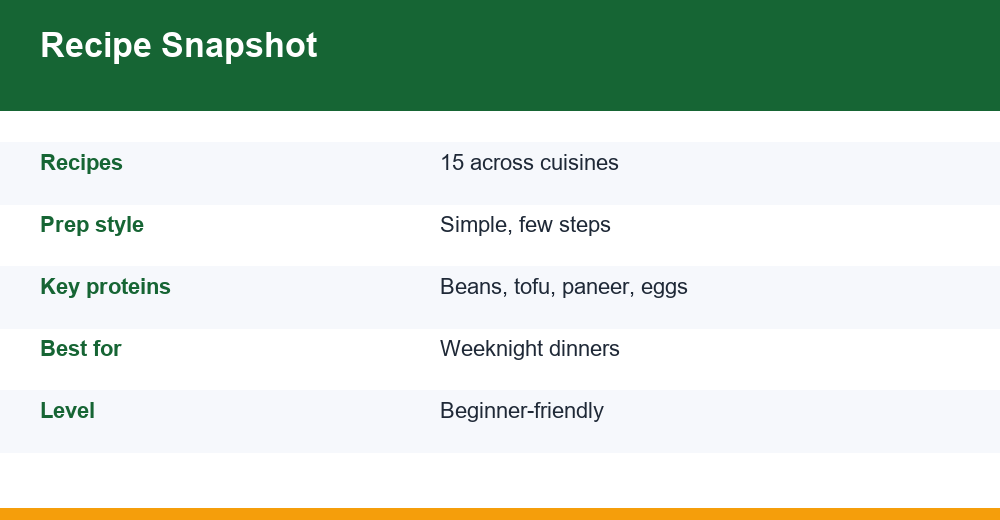
If you want food that satisfies without a slab of meat at the center, these vegetarian recipes deliver real flavor, staying power, and variety in equal measure. Drawing on legumes, tofu, paneer, and eggs, this collection spans cuisines so weeknight dinners never feel repetitive. Every dish leans on simple steps and everyday ingredients you can actually find at the shops.
Table of Contents
Why Meatless Meals Are Worth It
Eating more plants doesn’t have to mean eating less, and it certainly shouldn’t leave you hungry an hour after dinner. When a meal is built around beans, whole grains, and a little cheese or egg, it can be every bit as hearty as a meat-based plate while often being gentler on your budget. The real trick is treating vegetables as more than an afterthought and giving each dish a genuine anchor of protein and texture.
The best vegetarian recipes lean on layers of flavor: browning, salt, acid, and a touch of fat, so nothing ever tastes bland or dutiful. Crisp the edges of a chickpea, char a wedge of paneer, or fold a soft-set egg through warm rice, and you end up with a dinner people genuinely look forward to rather than simply tolerate.
You don’t need to label yourself anything to enjoy these dishes, either. Whether you’re fully vegetarian, cooking for the odd meat-free night, or just trying to stretch your grocery shop further, plant-forward cooking rewards a bit of curiosity.
There’s real pleasure in cooking this way, too. Building a meal from vegetables, pulses, and grains invites you to play with color, spice, and texture rather than leaning on one central ingredient. Over time you gather a small repertoire of dishes you can throw together almost on autopilot, which is exactly what a busy week tends to call for.
- Budget-friendly staples like lentils, beans, and eggs stretch a long way
- Naturally rich in fiber, which helps meals feel satisfying
- Endlessly flexible for different tastes, cuisines, and seasons
- Easy to scale up for batch cooking and next-day leftovers
The Building Blocks of Filling Vegetarian Recipes
A filling meat-free dinner almost always comes down to one thing: a solid source of protein. Once you know your options, you can mix and match them across the week without much thought. For a closer look at where these nutrients come from, our guide to plant-based protein breaks down the everyday sources worth keeping stocked.
- Legumes: chickpeas, black beans, kidney beans, and lentils
- Soy foods: tofu, tempeh, and edamame
- Dairy and paneer for creamy, hearty texture
- Eggs, which cook fast and pair with almost anything
- Whole grains like quinoa, freekeh, and brown rice for extra bite
Pair two of these in one bowl, say lentils with a scattering of feta, and you build a meal that keeps you full for hours. Cooking a pot of beans or pressing a block of tofu on the weekend makes the rest of the week feel effortless.
It helps to think in terms of pairings rather than single ingredients. A grain plus a pulse, or a pulse plus a little dairy, gives you a fuller range of nutrients and a more interesting plate. Keep a couple of these combinations in mind and dinner rarely feels like a puzzle, even at the end of a long day.
Quick Weeknight Vegetarian Recipes
On busy evenings you want dinner on the table in about half an hour. These five dishes rely on pantry staples and minimal chopping, and most come together in a single pan. If you’re chasing extra staying power, browse more ideas in our roundup of high-protein meals.
1. Chickpea and spinach curry
Simmer canned chickpeas with onion, garlic, ginger, and a spoonful of curry paste, then wilt in a big handful of spinach. Finish with a squeeze of lemon and serve over rice or with warm flatbread. It reheats beautifully the next day, so it’s worth making a double batch.
2. Tofu and broccoli stir-fry
Press and cube firm tofu, sear until golden, then toss with broccoli in a quick soy, garlic, and sesame sauce. Scatter over spring onions and serve in around 20 minutes on noodles or steamed rice.
3. Black bean tacos
Warm black beans with cumin and smoked paprika, then pile into tortillas with avocado, crunchy slaw, and a squeeze of lime. Add crumbled cheese or a spoonful of yogurt if you like, and dinner is ready in minutes.
4. Lentil bolognese
Swap the mince for brown or green lentils in a classic tomato sauce with onion, carrot, and celery. Let it bubble away while the pasta cooks, then finish with a little grated hard cheese and torn basil.
5. Vegetable frittata
Whisk eggs with whatever vegetables need using up, pour into a hot ovenproof pan, and finish under the grill until just set. Lovely hot, warm, or cold in a lunchbox the following day.
None of these need special equipment or hard-to-find ingredients. Once you’ve made each one a couple of times, you’ll start improvising, swapping in whatever vegetables are looking tired in the fridge or whichever beans happen to be in the cupboard.
Global Flavors, One Meat-Free Table
One of the joys of cooking without meat is how many cuisines already celebrate it. Borrowing from kitchens around the world keeps your weeknight rotation exciting and introduces new spice blends and techniques along the way.
Indian and South Asian
Home cooks here have perfected filling vegetable dishes. Think creamy paneer tikka masala, comforting rajma (kidney bean curry), and everyday dal tempered with cumin and mustard seeds. Many of these freeze well and taste even richer the longer they sit.
Mediterranean and Middle Eastern
Reach for halloumi and vegetable traybakes, crisp falafel wraps, Greek-style feta and chickpea salads, and shakshuka, eggs poached in a spiced tomato sauce. A handful of olives, lemon, and fresh herbs makes simple ingredients feel special.
East and Southeast Asian
Miso-glazed tofu rice bowls, gado-gado, and tempeh tossed in peanut sauce show how soy foods soak up bold, savory flavors. A splash of soy, a little chili, and toasted sesame go a long way toward a restaurant-style finish at home.
- Keep a few spice pastes and sauces on hand to shortcut flavor
- Toast whole spices to wake them up before adding any liquid
- Finish dishes with fresh herbs, citrus, or chili for brightness
Exploring these traditions is also a gentle way to widen your everyday cooking. Borrow a technique here, a spice blend there, and before long your own weeknight meals carry a little more depth without any extra effort.
15 Recipes at a Glance
Here are all 15 dishes mentioned across this guide, sorted by cuisine and main protein so you can choose to suit whatever is in your fridge. These vegetarian recipes span quick curries, hearty bowls, and make-ahead bakes. Timings are a rough guide and will vary with your kitchen.
| Recipe | Cuisine | Main protein | Approx. time |
|---|---|---|---|
| Chana masala | Indian | Chickpeas | 30 min |
| Paneer tikka masala | Indian | Paneer | 40 min |
| Rajma | Indian | Kidney beans | 45 min |
| Dal tadka | Indian | Lentils | 35 min |
| Black bean tacos | Mexican | Black beans | 20 min |
| Three-bean chili | Tex-Mex | Mixed beans | 40 min |
| Tofu & broccoli stir-fry | Chinese | Tofu | 20 min |
| Miso-glazed tofu bowl | Japanese | Tofu | 30 min |
| Tempeh peanut noodles | Indonesian | Tempeh | 25 min |
| Lentil bolognese | Italian | Lentils | 35 min |
| Vegetable frittata | European | Eggs | 25 min |
| Halloumi traybake | Mediterranean | Halloumi | 35 min |
| Falafel wraps | Middle Eastern | Chickpeas | 30 min |
| Shakshuka | North African | Eggs | 30 min |
| Feta & chickpea salad | Greek | Chickpeas & feta | 15 min |
Notice how a handful of proteins, beans, tofu, eggs, and cheese, reappear again and again. Master a few base techniques and you can cook every dish on this list with confidence.
Keeping Your Plate Balanced
A satisfying plate usually balances three things: a protein, a complex carbohydrate, and plenty of vegetables, with a little fat for flavor and fullness. Getting that mix right is what separates a light snack from a proper meal that carries you comfortably to the next one.
General healthy-eating advice, such as the NHS guidance on a balanced vegetarian diet, points to eating a variety of foods across the week rather than fixating on any single meal. Individual needs vary, so anyone managing allergies or a specific medical condition should speak with a doctor or registered dietitian.
- Combine a protein with a whole grain for lasting energy
- Fill about half the plate with vegetables, cooked or raw
- Add a source of fat like olive oil, nuts, or avocado
- Keep portions flexible and eat to your appetite
There’s no need to weigh or track anything here. Listen to your hunger, enjoy a range of colors and textures, and treat these meals as an invitation to eat well rather than a rigid set of rules.
If you cook for a family, this flexible approach makes it easy to please different appetites at the same table. Set out a few components, let everyone build their own plate, and no one has to eat exactly the same amount or the same mix.
Meal Prep and Storage Made Simple
Most vegetarian recipes here store well, which makes them ideal for batch cooking. Curries, chilis, and grain bowls often taste even better the next day once the flavors have had time to settle. A little planning on the weekend turns into fast, low-effort dinners all week long.
A quiet hour on a Sunday can reshape the whole week. Roast a tray of vegetables, simmer a pot of beans, and whisk together a dressing or two, and suddenly midweek dinners become a matter of assembly rather than cooking from scratch.
- Cook a big pot of beans or lentils and freeze them in portions
- Press and marinate tofu ahead so it’s ready to sear
- Chop hardy vegetables in advance and store them airtight
- Keep cooked grains on hand for quick, throw-together bowls
| Dish type | Fridge | Freezer | Reheat tip |
|---|---|---|---|
| Bean curries & chili | 3-4 days | Up to 3 months | Add a splash of water |
| Cooked grains | 3-4 days | Up to 3 months | Sprinkle water, cover |
| Tofu stir-fry | 2-3 days | Not ideal | Reheat gently in a pan |
| Frittata & egg dishes | 3 days | 1 month | Warm low or eat cold |
| Soups & dals | 3-4 days | Up to 3 months | Loosen with stock |
Always cool food quickly, keep it in airtight containers, and reheat until piping hot right through. When in doubt about how long something has been sitting in the fridge, it’s safest to let it go.
Frequently Asked Questions
How do I make vegetarian meals more filling?
Anchor each meal with a real protein such as beans, lentils, tofu, paneer, or eggs, then pair it with a whole grain and plenty of vegetables. Fiber and protein together help meals feel satisfying, so you’re less likely to reach for a snack an hour later.
Can meat-free meals provide enough protein?
Yes. Legumes, soy foods like tofu and tempeh, dairy, and eggs all supply protein, and combining a few across the day adds up easily. Eating a variety of these foods, alongside grains and seeds, helps most people meet their needs. Anyone with specific concerns can check in with a dietitian.
What are the easiest veggie dishes for beginners?
Start with forgiving one-pan meals: a chickpea curry, black bean tacos, a vegetable frittata, or lentil bolognese. They use pantry staples, need little chopping, and are hard to ruin. Once you feel confident, branch out into stir-fries and traybakes from other cuisines.
How long do cooked vegetarian dishes last?
Most bean curries, soups, and grain bowls keep three to four days in the fridge and freeze well for up to three months. Cool them quickly, use airtight containers, and reheat until steaming hot. Egg-based dishes are best eaten within about three days.