Whole grains are one of the simplest upgrades you can make to everyday meals, and they taste far better than their old, worthy reputation suggests. This guide explains what actually makes a grain “whole,” why these foods earn a regular place on your plate, and how to fold more of them into the cooking you already do. You will find friendly comparisons, practical swaps and honest caveats along the way. No rules to memorise and no diet to follow, just useful, everyday information.
Table of Contents
What Makes a Grain Whole?
Every grain of wheat, rice or oats begins life as a tiny seed built from three distinct layers. When all three stay together, you have a whole grain. When any layer is milled away, you have a refined one. It really is that straightforward, and understanding the parts makes every later choice easier.
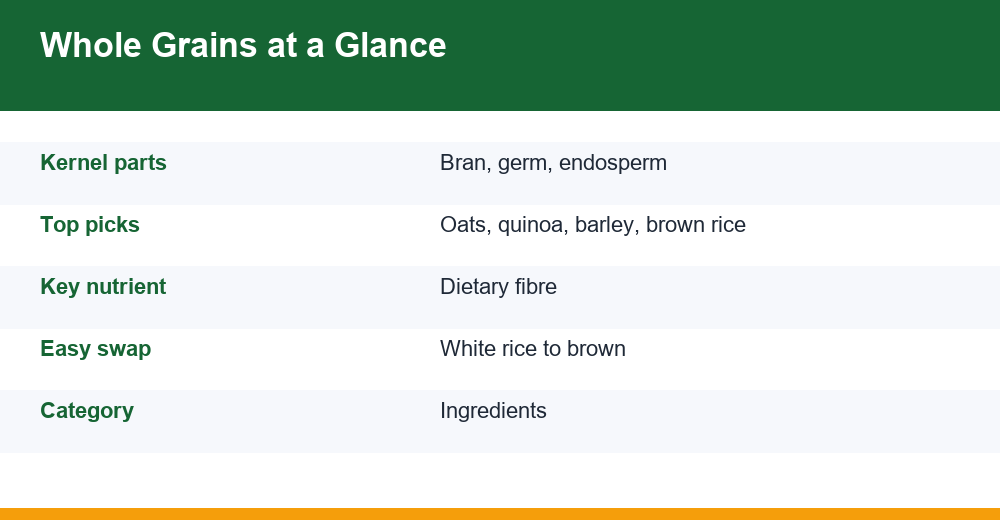
Picture the kernel from the outside in, because each layer plays its own part:
- Bran — the fibrous outer coat that carries most of the fibre, along with B vitamins and protective antioxidants.
- Germ — the nutrient-dense core that would sprout into a new plant, rich in healthy fats, vitamin E and minerals.
- Endosperm — the large starchy middle that fuels that sprout, made up mostly of carbohydrate with a little protein.
Refining strips away the bran and germ, leaving only the endosperm behind. That gives a softer texture and a longer shelf life, which is why refined flour became so popular. The trade-off is that milling also removes much of what makes the grain nourishing. Keep the kernel intact and you keep the fibre, the minerals and the slower, steadier energy that naturally comes with them.
You can spot true whole-grain products by reading the ingredients list rather than the front of the pack. Words like “multigrain,” “stoneground” or “made with wholemeal” do not always mean the whole kernel is present. Look instead for a whole grain named first, such as whole oats, brown rice or wholemeal flour, and you will know exactly what you are getting.
The Everyday Benefits of Whole Grains
Research consistently links eating patterns rich in whole grains with better long-term health. According to the Harvard T.H. Chan School of Public Health, diets built around intact grains are associated with a lower risk of heart disease, type 2 diabetes and some digestive problems. These are broad population patterns rather than promises for any one person, but the direction of the evidence is steady and encouraging.
Much of the benefit traces back to fibre. The bran and germ supply both the insoluble roughage that keeps digestion regular and the soluble fibre that helps steady blood sugar and support healthy cholesterol. Fibre also makes meals more satisfying, so you tend to feel comfortably full for longer without any special effort or counting.
There is more to the story than fibre alone. Intact grains provide magnesium, iron, selenium and B vitamins, plus plant compounds that appear to work together in ways a single supplement cannot easily copy. If you are gradually building more fibre into your routine, these foods pair naturally with other high-fiber foods such as beans, lentils, fruit and vegetables.
A gentle caveat is worth keeping in mind. These grains are one helpful part of eating well, not a cure-all, and no single food carries that kind of power. They do their best work as a regular habit within a varied plate, rather than as something you track, ration or worry about from meal to meal.
Popular Whole Grains to Get to Know
You do not need an exotic pantry to eat well. A small handful of whole grains covers most everyday cooking, and each one brings its own texture and personality to the table. Here is a quick comparison to help you choose the right grain for the job:
| Grain | Texture | Cook time | Great for |
|---|---|---|---|
| Rolled oats | Soft, creamy | 5-10 min | Porridge, baking |
| Brown rice | Chewy, nutty | 40-45 min | Bowls, stir-fries |
| Quinoa | Light, fluffy | 15 min | Salads, sides |
| Barley | Plump, chewy | 40-50 min | Soups, stews |
| Bulgur wheat | Tender | 12-15 min | Pilafs, tabbouleh |
| Farro | Hearty, chewy | 25-30 min | Grain bowls, salads |
Oats
Oats are the friendliest place to begin. They carry a soluble fibre called beta-glucan that is well studied for supporting healthy cholesterol, and they cook in minutes. Beyond a warming bowl of porridge, you can stir them into pancakes, blend them into smoothies, scatter them over fruit crumbles or use them in place of breadcrumbs in savoury dishes.
Brown rice
Brown rice is simply rice with its bran and germ still attached. That gives it a pleasant nutty bite and noticeably more fibre and magnesium than the polished white version. It takes a little longer to cook, but it makes a reliable base for almost any dinner, from weeknight curries and stir-fries to colourful stuffed peppers.
Quinoa
Technically a seed but cooked and eaten like a grain, quinoa is quick to prepare and provides all nine essential amino acids, which makes it a genuinely complete plant protein. Its light, fluffy texture suits cold salads and warm grain bowls alike, and it works beautifully as a speedy side on a busy weeknight.
Barley and farro
Barley brings a satisfying, plump chew that makes soups and stews feel like a proper meal, and it holds its shape well when cooked ahead. Farro, an ancient wheat, offers a similar heartiness with a slightly nuttier flavour. Both are excellent tossed through salads or spooned alongside roasted vegetables for extra body and staying power.
Whole wheat and bulgur
Whole-wheat products are the everyday workhorses of this group. Wholemeal bread, pasta and flour slot straight into familiar recipes with almost no learning curve, so you can upgrade favourites without changing how you cook. Bulgur, made from cracked whole wheat, cooks especially fast and forms the tender base of classic dishes such as tabbouleh and warm pilafs.
Refined vs Whole: What Really Changes
The difference between refined and intact grains comes down entirely to that milling step. Refining removes the bran and the germ, and doing so changes both the nutrition on the label and the way your body responds to the food once you eat it.
- Fibre: intact versions keep most of it, while refined versions lose the majority during milling.
- Energy release: whole kernels digest more slowly for steadier energy, whereas refined grains tend to be absorbed more quickly.
- Nutrients: milling strips out minerals and B vitamins, though some are added back in through enrichment.
- Fullness: the extra fibre in intact versions tends to keep you satisfied for noticeably longer.
None of this makes refined grains forbidden, and it helps to keep a sense of proportion. White rice, ordinary pasta and a good loaf of white bread all have their place at the table. There are even times, such as with certain digestive conditions, when a doctor may specifically suggest lower-fibre choices for a while.
The aim is not a strict rule to obey but a gentle shift in balance. If more of your grains, more of the time, are the intact kind, you gain the benefits without giving up the foods you love. Progress here is about the overall pattern across a week, never about being perfect at a single meal.
How to Swap in More
Getting more whole grains into your week does not require an overhaul. Small, repeatable swaps tend to stick far better than a dramatic reset, and your taste buds usually adjust more quickly than you expect. Try easing yourself in with a few of the changes below:
- Start half-and-half. Mix brown rice with white, or wholemeal pasta with regular, until the new texture feels completely normal.
- Rethink breakfast. Swap a sugary cereal for oats topped with fresh fruit and a spoonful of yoghurt.
- Upgrade your bread. Choose a loaf that names a whole grain as its very first ingredient.
- Bulk up soups and salads. Stir in cooked barley, farro or quinoa for extra body and staying power.
- Batch-cook once. Make a big pot of grains at the weekend to spoon into meals throughout the week.
Go gradually, and sip a little more water as your fibre intake climbs, since that keeps digestion comfortable while your body adjusts. Remember, too, that grains are only one slice of the picture. They sit most happily within a balanced diet that also leans on vegetables, fruit, protein and healthy fats, rather than being asked to carry the whole load alone.
One more gentle tip: pair each new grain with flavours you already enjoy. Toss warm farro with a favourite dressing, fold quinoa through a salad you make often, or cook brown rice in stock rather than water. When a swap tastes genuinely good, it stops feeling like a project and simply becomes the way you cook.
Cooking and Storing Grains
Cooking and storing these grains well is what turns good intentions into genuinely easy dinners. Most follow the same simple method: rinse well, simmer in salted water or stock until tender, then let them rest for a few minutes off the heat before fluffing with a fork. A splash of oil or a bay leaf in the pot lifts the flavour with almost no extra effort.
Because the germ contains natural oils, intact grains and whole-grain flours can turn stale a little faster than their refined cousins. A small amount of care with storage keeps everything fresh and ready to use:
| Form | Keeps for | Best kept in |
|---|---|---|
| Whole-grain flour | 1-3 months | Fridge or freezer |
| Intact grains (rice, barley) | 6-12 months | Airtight jar, cool pantry |
| Rolled oats | 3-6 months | Sealed container |
| Cooked grains | 3-4 days | Covered, in the fridge |
Cooked grains also freeze beautifully, which is handy for busy weeks. Portion them out flat in freezer bags, press out the air, then reheat straight from frozen with a splash of water to loosen them. It is quietly one of the easiest ways to keep a wholesome base on hand for meals at a moment’s notice.
Toasting is another small trick worth knowing. Warming dry grains in a little oil for a minute or two before adding liquid deepens their nutty flavour and helps the finished dish taste richer. It takes almost no time, works for rice, quinoa, barley and farro alike, and turns a plain pot of grains into something you look forward to.
A Note on Individual Needs
Whole grains suit most people most of the time, yet everyone’s body and situation is a little different. If you live with coeliac disease or a gluten sensitivity, you will want naturally gluten-free options such as certified gluten-free oats, brown rice, quinoa and buckwheat, and you will need to steer clear of wheat, barley and rye.
Digestive conditions, food allergies and various medical needs can all change what is right for you on any given day. This article offers general information rather than personal advice, so please speak with your doctor or a registered dietitian before making big changes if you manage a health condition or a known allergy. Tailored guidance will always beat a one-size-fits-all rule.
Above all, try to keep the bigger picture in view. There is no single perfect way to eat, and the ideal plate looks a little different for each of us. The real goal is steady, enjoyable food that leaves you nourished and satisfied, built from habits you can happily keep up over the long run.
Frequently Asked Questions
Do these grains help you feel fuller?
They often do. The fibre in the bran and germ slows digestion and adds bulk, so meals tend to feel satisfying for longer. That said, fullness depends on the whole meal and on the individual, so treat grains as one helpful piece of a varied plate rather than a solution on their own.
What is the difference between whole and refined grains?
A whole grain keeps all three parts of the kernel: the bran, the germ and the endosperm. Refining removes the bran and germ, stripping out much of the fibre and many of the minerals. Intact versions therefore offer more fibre, more nutrients and steadier energy than their refined counterparts.
Which whole grain is the healthiest?
There is no single winner, and variety is genuinely the strength here. Oats, quinoa, brown rice, barley and whole wheat each bring different nutrients and textures to your cooking. Rotating between them gives you a broader mix of fibre, minerals and plant compounds than leaning on any one grain alone.
Can I eat grains if I am gluten-free?
Yes. Plenty of naturally gluten-free choices exist, including brown rice, quinoa, buckwheat, millet and certified gluten-free oats, while wheat, barley and rye should be avoided. If you have coeliac disease, check labels carefully and ask a registered dietitian for guidance tailored to your needs.