Batch cooking is simply making more than one meal’s worth of food at a time, then storing the extra for the busy days ahead. It is one of the friendliest habits a home cook can build: less weeknight stress, less waste, and dinner that is already half-done when you walk through the door.
Table of Contents
What Is Batch Cooking?
At its heart, batch cooking means making a larger quantity of food in one session, then dividing it into portions you eat over the following days or stash in the freezer for later. Instead of starting from scratch every evening, you cook once and enjoy the results several times over.
It comes in a few friendly shapes. Some people prepare complete meals, like a big pot of chilli ready to ladle out. Others make building blocks: a pan of grains here, a tray of roasted vegetables there, then mix and match through the week. There is no single right way, so lean on whichever style suits your kitchen and your appetite.
It also suits almost any household. A busy parent might cook one big weekend meal, while a couple could prep a few lunches and leave dinners fresh. You can go all in with a packed freezer or simply make a bit extra whenever the stove is already on. Start small, see what fits your routine, and let the habit shape itself around your week.
If you have ever doubled a soup recipe and frozen half, you have already done it. The only real change now is doing it on purpose, with a little planning behind it rather than by happy accident.
How Batch Cooking Saves Time and Money
The appeal is practical, not magical. Chopping onions once for four meals instead of four times saves real minutes, and so does washing a single set of pans. When you cook in bulk, the hands-on effort barely changes while the number of dinners multiplies.
The savings add up on the grocery side too. Larger packs of rice, beans, or chicken usually cost less per portion, and cooking at home means fewer last-minute takeaways when you are tired. Using ingredients fully, rather than letting half a bag of spinach wilt in the drawer, quietly trims your food bill.
- Fewer cooking sessions across the week, so more free evenings.
- Less food waste, because you plan around what you buy.
- Cheaper per-portion costs from buying and cooking in bulk.
- A ready answer to the nightly “what’s for dinner?” question.
- A gentler landing on the days when energy is low.
There is a quieter benefit, too: a steadier rhythm to your week. When a few meals are already sorted, you make fewer rushed decisions about food and lean less on whatever is quickest at 7pm. Many people find that having a plan in place simply makes mealtimes calmer, which is worth as much as the time and money saved.
None of this means eating the same thing five nights running. With a handful of components on hand, you can rotate flavours and keep meals interesting while still leaning on work you have already done.
What to Cook in Bulk (and What to Skip)
The best candidates for a big batch are foods that store well, reheat without turning sad, and play nicely across different meals. Grains, pulses, soups, stews, and hearty sauces are the classic workhorses. Simmered dishes such as one-pot meals are ideal, since they are built to hold their texture and often taste even better the next day.
| Food | Fridge | Freezer | Notes |
|---|---|---|---|
| Cooked grains (rice, quinoa) | 3-4 days | 1-2 months | Cool quickly, reheat piping hot |
| Soups and broths | 3-4 days | 2-3 months | Freeze flat in bags to save space |
| Chilli and curries | 3-4 days | 2-3 months | Flavour often deepens overnight |
| Cooked beans and lentils | 3-4 days | 2-3 months | Freeze in a little of their liquid |
| Mince and meatball sauces | 3-4 days | 2-3 months | Portion before freezing |
| Roasted vegetables | 3-4 days | Not ideal | Best fresh, or blitzed into soup |
Sauces and bases deserve a special mention, because they stretch so far. A big pot of tomato sauce can become pasta one night, a pizza base another, and the start of a soup later in the week. Cooking these flexible foundations in bulk gives you the most reward for a single session at the stove.
A few things simply do not enjoy the freezer. Crisp salads, plain boiled potatoes, and anything with a high water content tend to go watery or grainy, and cream, yoghurt, or mayonnaise-based sauces can split when thawed.
- Skip freezing crunchy raw vegetables and leafy salads.
- Add fresh herbs, dairy, or crispy toppings after reheating instead.
- Keep fried or breaded foods for the fridge, not the freezer, when you can.
Handy Gear for Cooking in Bulk
You do not need a kitchen full of gadgets to get started. The single most useful upgrade is a set of good containers: stackable, freezer-safe, and ideally see-through so you can spot what is inside at a glance. A stash of resealable freezer bags is just as handy, since they lie flat, freeze fast, and slot neatly into gaps.
- Freezer-safe containers in one or two consistent sizes that stack.
- Resealable bags for soups and sauces you can freeze flat.
- A large, roomy pan or pot so food browns rather than steams.
- A permanent marker or roll of tape for labelling and dating.
- A few sheet pans for roasting vegetables and proteins at once.
Sticking to one or two container sizes pays off more than you might expect. Matching lids and tidy stacks mean less rummaging and a fridge that actually closes. If you enjoy shortcuts, a slow cooker or a large casserole dish makes hands-off, big-batch meals easy, but a single sturdy pot will carry you a long way while you find your feet.
Scaling Recipes Without the Guesswork
One of the quiet skills of batch cooking is scaling a recipe up without it going sideways. A dish that serves four rarely doubles in a perfectly straight line, so a little care here saves disappointment later.
Seasonings are the usual culprit. Salt, chilli, and strong spices can overwhelm a big pot if you simply double them, so add most of the amount, taste near the end, and adjust gradually. Aromatics like garlic and ginger can often be scaled up more freely.
- Double the base ingredients, but season to taste at the finish.
- Use a pan roomy enough that food browns instead of steaming.
- Expect longer heat-up and simmer times for a larger volume.
- Brown meat or vegetables in batches so they colour properly.
- Jot down what worked so next time is even easier.
Cooking times shift as well. A bigger volume takes longer to come up to heat and longer to simmer down, so lean on how the food looks and tastes rather than the clock alone. Liquids can be the trickiest part: a doubled stew may need less than double the stock, so start cautious and loosen it later if needed.
Pan size matters more than people expect. An overcrowded pot traps steam, which softens food that should be caramelised. If your biggest pan is modest, cook in two rounds rather than forcing everything in at once.
Cooling, Freezing and Portioning Safely
Cooling is the step most beginners rush, and it is worth slowing down for. Hot food left out for hours sits in the range where bacteria multiply, so aim to cool food quickly and get it into the fridge or freezer within a couple of hours. For a deeper look at safe storage, the NHS guide to storing food and leftovers safely is a reliable, no-nonsense reference.
- Divide hot food into shallow containers so it cools faster.
- Sit dense pots of soup or stew in a bowl of iced water to speed things along.
- Let food cool to room temperature, then refrigerate or freeze promptly.
- Never put a large pot of steaming food straight into the freezer.
- Label every container with the dish name and the date.
Portioning is where batch cooking really earns its keep. Freezing meals in single servings means you thaw only what you need, rather than defrosting a giant block for one lunch. Freezer bags laid flat freeze quickly and stack like files; rigid containers suit saucier dishes. Squeeze out excess air to guard against freezer burn, and leave a little headroom in liquids, which expand as they freeze.
Labelling sounds fussy until the day you face three identical frozen bricks. A quick note of the dish and the date turns your freezer into something you can actually shop from. Many people like to keep a short running list on the door, crossing off meals as they go, so nothing quietly disappears to the back and lingers past its best.
Reheating and Storage Times
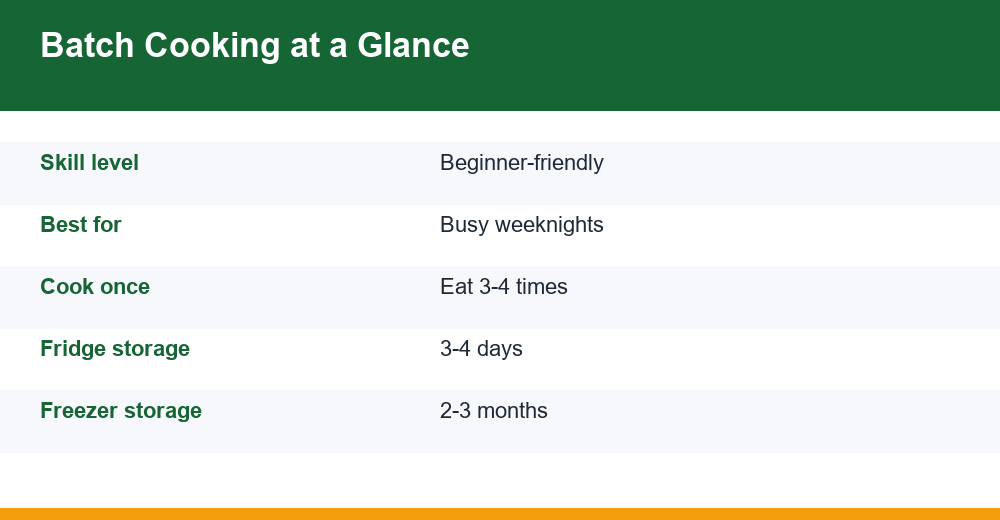
When it is time to eat, reheat food until it is steaming hot all the way through, not just warm at the edges. Stir partway so there are no cold spots, and only reheat a portion once. As a rule of thumb, most cooked dishes keep three to four days in the fridge and two to three months in the freezer for best quality.
| Method | Best for | Tip |
|---|---|---|
| Fridge, overnight | Frozen portions | Safest, most even thawing |
| Microwave | Single servings | Stir halfway, cover loosely |
| Stovetop | Soups, sauces, grains | Add a splash of water |
| Oven | Bakes and traybakes | Cover with foil to keep it moist |
A little moisture goes a long way when reheating. Grains and pasta dry out in storage, so a splash of water or stock helps them loosen up and taste freshly made. Sauces may look thick and claggy straight from the fridge, then relax back to their old selves once warmed through and stirred, so judge the texture only after it is properly hot.
Thaw frozen meals in the fridge, the microwave, or a sealed bag under cold water, rather than leaving them out on the counter. Try not to refreeze food that has already been thawed and reheated, as the quality slips and the safety margin shrinks. When in doubt about anything that smells or looks off, it is always kinder to yourself to throw it out.
Keeping Your Meals Fresh and Varied
The most common worry newcomers raise is boredom, and it is a fair one. The trick is to cook flexible bases rather than fixed, finished dinners. A neutral pot of grains, a tray of roasted vegetables, or a plain protein can lean in wildly different directions depending on what you add on the night.
- Take a grain bowl Mediterranean with lemon, herbs, and olive oil.
- Send the same base east with soy, ginger, and a splash of sesame.
- Warm it up with cumin, smoked paprika, and a squeeze of lime.
- Finish plain dishes with fresh toppings, pickles, or a lively sauce.
Small fresh touches do the heavy lifting here. A handful of herbs, a spoon of yoghurt, toasted nuts, or a bright dressing can make a reheated bowl feel brand new for barely any effort. Rotating just two or three core recipes, then dressing them differently each time, keeps things interesting without doubling your time in the kitchen.
A Simple Weekend Batch-Cook Plan
You do not need a marathon session to feel the benefit. A focused hour or two on a quiet afternoon is plenty for your first batch cooking weekend, and you can build from there once the rhythm feels natural. If you are brand new to the whole idea, our guide to meal prep for beginners pairs neatly with this one.
- Pick two or three dishes that share ingredients, like a chilli and a vegetable soup.
- Write a short shopping list and buy the bulkier staples in larger packs.
- Start the longest-cooking dish first, then prep the others while it simmers.
- Cook one grain and one protein alongside as flexible building blocks.
- Cool, portion, label, and store everything before you sit down.
- Note what you would tweak next time on your phone or a scrap of paper.
A little overlap makes the session flow. While the chilli simmers, roast a tray of vegetables and set a pot of grains going, so three things cook at once with barely more effort than one. Tidy as you go, wiping boards and washing pans between tasks, and the finish line feels far calmer than a mountain of clearing up at the end.
Keep it low-pressure. Even preparing a single extra portion counts, and there is no gold star for filling the freezer to bursting. Choose foods you genuinely enjoy, and let the habit grow at its own pace.
A gentle note to close: this is general guidance for everyday home cooking, not personalised advice. Individual needs vary, so if you are managing a medical condition, a food allergy, or specific dietary requirements, it is best to check in with your doctor or a registered dietitian.
Frequently Asked Questions
How long does batch-cooked food last?
Most cooked meals keep three to four days in the fridge and two to three months in the freezer for the best quality. Always label containers with the date, cool food quickly before storing, and reheat until it is steaming hot right through.
Do I need a big freezer to get started?
Not at all. You can batch cook just for the week ahead and keep portions in the fridge. If you do use a freezer, flat-frozen bags stack neatly and take up far less room than bulky tubs, so even a small freezer goes a long way.
Can I batch cook if I live alone?
Absolutely, and it is one of the best reasons to try it. Cooking one dish and freezing it in single servings means ready meals without repetition. Rotate two or three recipes so you can pick something different each night rather than eating the same thing on a loop.
Is it safe to reheat rice and grains?
Yes, as long as you cool cooked grains quickly, refrigerate within an hour or two, and reheat until piping hot. Store rice for no more than a day or two, only reheat each portion once, and never leave cooked grains sitting at room temperature for hours.