Good meal prep ideas can turn a chaotic week into something far calmer, sparing you the 6pm scramble and the pull of yet another takeaway. This guide gathers 15 make-ahead meals across breakfast, lunch, dinner and snacks, each with clear notes on what keeps happily in the fridge and what freezes beautifully. Everything here is flexible, so you can adjust portions and flavours to fit your own routine rather than the other way round.
Table of Contents
Why These Meal Prep Ideas Make the Week Easier
The best part of planning ahead is not the tidy rows of containers in your fridge, satisfying as those are. It is walking into the kitchen after a long day and knowing dinner is already mostly done. Thoughtful make-ahead meals take the daily decision-making off your plate, which is often the most tiring part of feeding yourself well.
These meal prep ideas are built around real life rather than a rigid plan. You do not have to cook every meal for the week in one long session, and you certainly do not have to eat the same lunch five days running. Prep a couple of components, batch one or two dishes, and leave a little room for spontaneity.
- Less food waste, because you shop and cook with a plan in mind
- Fewer last-minute takeaways on the nights you are worn out
- More balanced plates, since vegetables are already washed and ready to go
- Calmer mornings and evenings across a genuinely busy week
Treat this as a menu to choose from rather than a set of rules. Everyone’s needs are different, and anyone managing allergies or a medical condition should check with a doctor or registered dietitian before making big changes to how they eat.
Getting Started Without the Overwhelm
If this is new to you, start small. Trying to prepare fifteen dishes on your very first Sunday is the quickest route to burnout, and to a fridge full of things you never quite finish. Our guide to meal prep for beginners covers the basics in full, but the short version is simple: pick two or three recipes, write a tight shopping list, and block out an hour or two.
A steady rhythm is what makes the habit stick. The same loose sequence works whether you are preparing one dish or five.
- Choose your meals and check what you already have in the cupboards
- Shop once, ideally for the whole batch in a single trip
- Cook the slowest things first, like grains and roasted vegetables
- Cool everything properly before portioning it into containers
- Add a date label to each container so nothing gets forgotten
Good containers matter far more than fancy gadgets. Glass boxes with tight lids, a handful of freezer bags, and a few small jars will cover almost everything in this guide. Clear containers help too, because you actually see what needs eating.
It also helps to keep a short rotation of dishes you genuinely enjoy, rather than chasing something new every week. Three or four reliable favourites, cooked on repeat with small changes to the toppings or seasoning, are what turn prepping from a chore into a comfortable habit. Once those feel effortless, you can widen the repertoire at your own pace.
Make-Ahead Breakfasts to Wake Up To
Mornings run smoother when breakfast is already sorted. These four options either reheat or assemble in minutes, and they hold their texture well over several days, so a little weekend effort carries you through the week.
Overnight Oats
Stir rolled oats into milk or a dairy-free alternative with a spoon of yoghurt and your favourite fruit, then leave them in the fridge overnight. They keep for up to four days, so make a few jars at once. Change the toppings each morning, adding nuts, berries or a little cinnamon, so they never feel repetitive.
Baked Egg Muffins
Whisk eggs with chopped vegetables and a little cheese, pour the mixture into a muffin tin, and bake until just set. They are endlessly adaptable, easy to carry, and they freeze well for the weeks you cook a double batch on purpose. Reheat them gently so the egg stays soft rather than rubbery.
Freezer Breakfast Burritos
Fill tortillas with scrambled eggs, beans and sauteed peppers, wrap them tightly, and freeze in a single layer. A minute or two in the microwave, or a little longer in the oven, and breakfast is ready. Wrap each one individually so you can pull out exactly how many you need.
Chia Pudding
Stir chia seeds into milk with a touch of vanilla and let them thicken in the fridge overnight. In the morning, layer with fruit or a spoon of nut butter. It is a gentle, filling start that keeps for several days and needs no cooking at all.
Lunches That Travel Well
Lunches need to survive a bag, a commute and a few hours before they reach a microwave, so choose things that genuinely travel. Each of these holds up whether you are at a desk, on the go, or eating at home between tasks.
Grain Bowls
Build bowls with a cooked grain such as quinoa or brown rice, a protein like chicken, tofu or chickpeas, and plenty of roasted or raw vegetables. Keep any dressing in a separate pot until you eat. Assembled bowls stay good for three to four days and reheat or eat cold equally happily.
Mason Jar Salads
Layer the dressing at the very bottom, sturdy vegetables next, and leaves at the top so nothing goes soggy. When you are ready, tip it into a bowl and toss. They look cheerful lined up in the fridge and hold their crunch for several days, which makes salad feel effortless.
A Big Pot of Soup
Soups and stews are quietly the most useful thing you can prepare. They often taste better a day or two later once the flavours settle, they stretch across several lunches, and they freeze beautifully. A lentil, vegetable or chicken soup covers a lot of ground with very little fuss.
Whole-Grain Wraps
Fill wraps with hummus, crunchy salad and a protein, then roll them tightly in paper. These are best eaten within a day or two, so treat them as an early-week choice. A squeeze of lemon over any avocado helps keep it from browning before lunchtime.
Dinners for Busy Evenings
Weeknight dinners are where prep pays off most. A little weekend groundwork means you are reheating and finishing a meal rather than starting from scratch at your hungriest and least patient. These four are forgiving and endlessly reworkable.
Sheet-Pan Roasted Vegetables and Protein
Roast a tray of mixed vegetables alongside chicken thighs, firm fish or halloumi. Cooked in bulk, the components mix and match through the week into bowls, wraps and quick plates. Store the vegetables and protein together or separately, whichever suits how you like to build a meal.
Chilli or Bean Stew
A pot of chilli, whether with mince or purely beans and vegetables, is forgiving and thoroughly freezer-friendly. Serve it over rice one night and with a baked potato the next. The flavour deepens as it sits, so the leftovers are genuinely something to look forward to rather than tolerate.
Baked Pasta
Assemble a tray of pasta with tomato sauce and vegetables, then bake it now or freeze it unbaked for later. Portion any leftovers into single servings so reheating is quick and even. A simple green salad on the side keeps the whole meal feeling fresh rather than heavy.
Stir-Fry Components
Chop your vegetables and marinate a protein in advance, and a stir-fry comes together in under ten minutes. Keep the prepped raw vegetables in the fridge and cook them fresh for the best texture. Rice made ahead of time finishes the plate without any last-minute effort.
If you cook a slightly larger batch than you need tonight, the extra portions become a free head start on next week. Tucked into the freezer and clearly labelled with the date, they turn a hectic evening into a five-minute job with almost no thought required.
Snacks Worth Prepping Ahead
Snacks are the part most people forget, yet having something ready is exactly what stops the mid-afternoon vending-machine run. These meal prep ideas quietly cover the gap between meals without asking much of you at all.
Energy Bites
Blitz oats, nut butter, seeds and a little honey or dried fruit, roll the mixture into balls, and chill. They keep for about a week in the fridge and considerably longer in the freezer. Two or three make a satisfying bite alongside a cup of tea when hunger strikes early.
Chopped Vegetables and Hummus
Wash and cut carrots, peppers and cucumber at the start of the week, and store the sticks in water to keep them crisp. Portion hummus into small pots for easy grabbing. Ready-to-eat vegetables are far more likely to actually get eaten than a whole bag waiting to be prepped.
Roasted Chickpeas
Toss drained chickpeas with a little oil and your favourite spices, then roast until crunchy. They make a savoury, protein-rich alternative to crisps. Store them in a loosely covered container rather than a sealed one, and they will hold much of their crunch for a few days.
Keeping a couple of these within easy reach takes the pressure off the moments when energy dips and nothing is planned. A small tub of energy bites or a jar of roasted chickpeas is often all it takes to bridge the afternoon comfortably until your next proper meal, without a trip to the shop.
Storage Life at a Glance
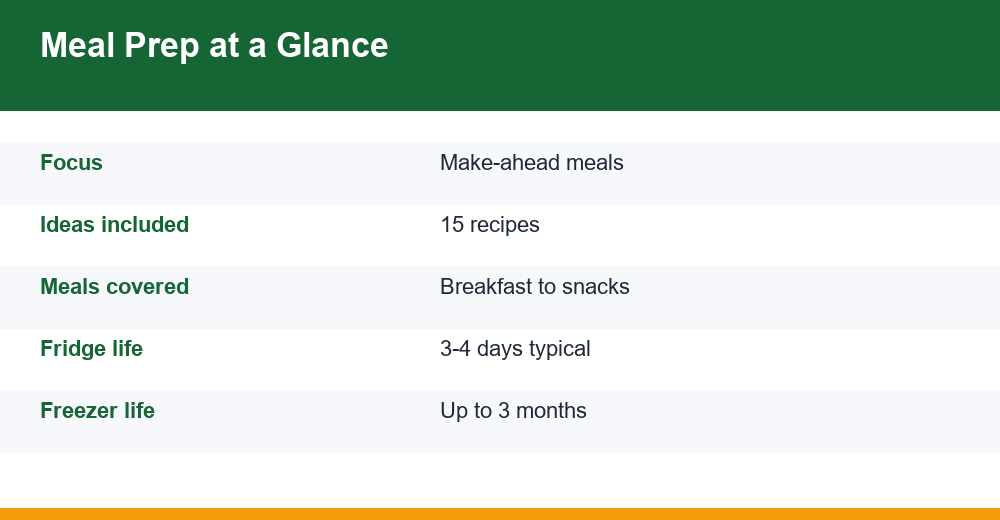
Knowing how long food lasts is what makes prepping feel safe rather than stressful. As a general guide, most cooked dishes keep three to four days in the fridge and up to three months in the freezer, though this varies with the ingredients and how they are stored.
Cool food quickly, keep it in airtight containers, and reheat until it is piping hot all the way through. Our guide on how to store food goes into more depth, and for official timings the USDA cold food storage charts are a reliable reference to keep handy.
| Meal prep idea | Fridge life | Freezer life |
|---|---|---|
| Overnight oats | Up to 4 days | Not recommended |
| Baked egg muffins | 3-4 days | Up to 3 months |
| Breakfast burritos | 3-4 days | Up to 3 months |
| Grain bowls | 3-4 days | 1-2 months |
| Mason jar salads | 3-5 days | Not recommended |
| Soup or stew | 3-4 days | Up to 3 months |
| Chilli / bean stew | 3-4 days | Up to 3 months |
| Baked pasta | 3-4 days | Up to 2 months |
| Energy bites | About 1 week | Up to 3 months |
| Roasted chickpeas | 3-4 days | Not ideal |
Above all, these meal prep ideas are meant to flex around your week rather than box you in. Trust your senses too: if something smells or looks off, let it go without a second thought. And because individual needs differ, anyone with allergies or a specific medical condition should seek tailored advice from a doctor or registered dietitian.
Frequently Asked Questions
How many meal prep ideas should a beginner start with?
Start with two or three, not fifteen. Pick one breakfast and one lunch or dinner, and perhaps a snack. Once that rhythm feels easy, add another dish the following week. Building up slowly is far more sustainable than an ambitious first attempt you never repeat.
How long do prepped meals last in the fridge?
Most cooked meals keep for three to four days when cooled quickly and stored in airtight containers. Salads with dressing and cut fruit are best eaten sooner. Always reheat food until it is steaming hot throughout, and discard anything that smells or looks off.
Can I freeze meal-prepped food?
Many dishes freeze well, including soups, stews, chilli, egg muffins and baked pasta, usually for up to three months. Foods with high water content, such as leafy salads and creamy dressings, do not freeze happily. Label and date everything, and thaw in the fridge overnight for the best results.
Is meal prep suitable for any diet?
The approach works for most eating styles, since you choose the recipes and portions yourself, making it flexible rather than restrictive. That said, individual needs vary, so anyone with allergies, intolerances or a medical condition should speak to a doctor or registered dietitian for personalised guidance.