Meal prep for beginners doesn’t have to mean a fridge crammed with identical, joyless containers or a whole Sunday lost to cooking. At its heart, it’s simply doing a little kitchen work ahead of time so weeknights feel calmer and eating well becomes the easy, obvious choice. This guide walks you through the styles, planning, shopping, containers, food safety and storage so you can start with real confidence.
Table of Contents
Why meal prep for beginners is worth it
The appeal of meal prep for beginners is mostly about removing daily friction. When part of dinner is already made, the tired, hungry, six-o’clock version of you doesn’t have to make three decisions and start from scratch. You just assemble and eat.
It also tends to make balanced eating feel more natural. When a cooked grain, a protein and some chopped vegetables are waiting in the fridge, reaching for something wholesome is genuinely easier than ordering in. That’s the quiet win most people notice first.
A few honest benefits people report when they start prepping ahead:
- Fewer last-minute takeaways and less food waste, since ingredients get used with a plan
- Calmer weeknights, because the hardest cooking is done in one relaxed session
- More consistent, varied meals rather than the same rushed default every night
- A gentler grocery routine, with one focused shop instead of scattered trips
There’s a quieter benefit too: less mental load. Deciding what to eat, several times a day, uses more energy than we tend to notice. When a few of those choices are settled in advance, you free up attention for everything else. Many people find that prepping ahead makes food feel less like a daily worry and more like a small comfort waiting at home.
You may notice it’s gentler on your budget as well. When you shop and cook with a plan, fewer ingredients get bought on a whim or thrown away unused, and pricier convenience food stops being the automatic default. Those small savings add up quietly over a month.
You don’t need to prep every meal to feel the difference. Even prepping two or three lunches a week is a meaningful, sustainable start. The goal is helpfulness, not a rigid all-or-nothing system you’ll abandon by Wednesday.
Three meal prep styles to try
There isn’t one correct way to prep. Most approaches fall into three styles, and you can happily mix them depending on your week.
1. Batch cooking
You cook a large quantity of one dish, then divide it into portions to eat over several days or freeze for later. Soups, chilli, curries, pasta sauces and grain bowls all shine here. If you want to go deeper on scaling recipes and freezing well, our guide to batch cooking covers it in detail.
2. Portioned meals
You assemble complete, ready-to-grab meals in individual containers, lunchbox style. This is brilliant for workday lunches, because there’s zero decision-making later. The trade-off is variety, so aim to portion just two or three days at a time to keep things fresh and interesting.
3. Ingredient prep
Instead of finished meals, you prep building blocks: roasted vegetables, cooked rice or quinoa, a batch of grilled chicken, washed greens, a dressing or two. Then you mix and match all week. This flexible style is a favourite for beginners, and it pairs perfectly with a stash of meal prep ideas to keep combinations fresh.
In practice, most people blend all three. You might batch-cook a big pot of soup for easy lunches, portion two grab-and-go dinners for your busiest days, and prep a few loose ingredients for everything else. Let the week decide. A calm stretch might call for less; a hectic one is often the perfect time to prep a little more.
Not sure where to begin? Start with ingredient prep for one or two components. It’s low-commitment, it teaches you the rhythm, and it rarely leads to that dreaded fridge full of food you’re suddenly tired of.
Planning and shopping without the stress
The single biggest predictor of success with meal prep for beginners is a light plan made before you shop. Fifteen minutes with a notepad beats an hour of aimless chopping later.
Keep the planning genuinely small:
- Choose two or three meals or components you actually want to eat, not just what sounds virtuous
- Check what’s already in your cupboards, fridge and freezer so nothing gets bought twice
- Write a short shopping list grouped by section, then stick to it
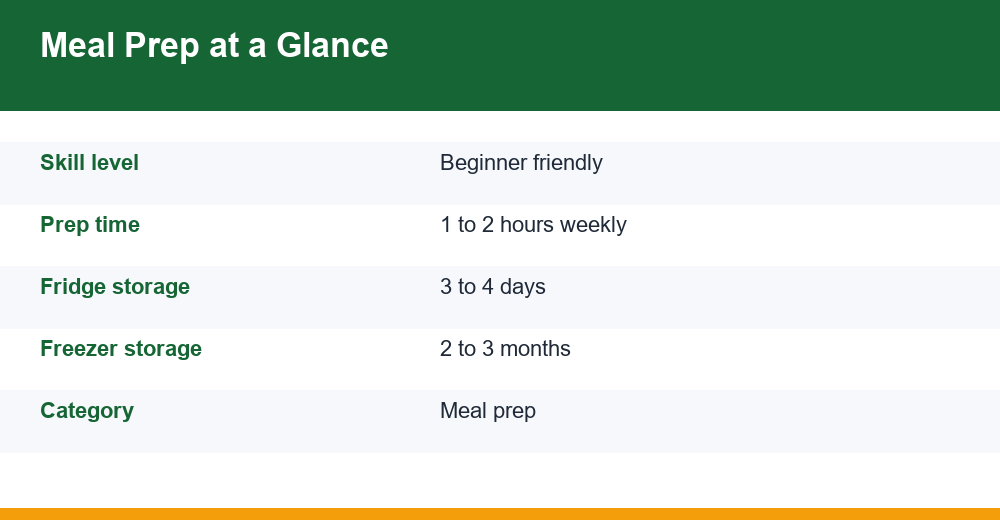
- Block out a realistic prep window, even just 60 to 90 minutes
When you shop, lean on flexible staples that stretch across several meals: eggs, oats, tinned beans and tomatoes, frozen vegetables, a grain like rice or couscous, and one or two proteins. These give you dozens of combinations without a sprawling list.
Shopping with a plan is also kinder to your budget. Buying for specific meals means fewer impulse pick-ups and less produce quietly wilting at the back of the fridge. Where you can, lean on what’s in season, since it tends to be cheaper, fresher and more flavourful, and it naturally keeps your meals varied through the year.
When you’re deciding how much to make, picture your plate rather than counting anything. Roughly half vegetables, a quarter a protein you enjoy, and a quarter a grain or starch is a simple, flexible guide that suits most people and takes the guesswork out of portioning.
It helps to group similar jobs together on prep day, too. Chop all your vegetables in one go, then roast a tray while a grain simmers, and boil eggs alongside. Working in stages like this feels far less chaotic than hopping between recipes, and it usually shaves a surprising amount of time off the whole session.
A helpful habit is cook once, use twice. Roast a big tray of vegetables and use half in a grain bowl and half in a wrap. Cook extra chicken tonight and it becomes tomorrow’s salad. This overlap is where prepping quietly saves the most time.
Containers, storage times and food safety
Good containers make prep pleasant rather than fiddly. You don’t need a huge collection to start. Six to eight airtight containers in a couple of sizes will carry you a long way.
- Glass containers are sturdy, don’t stain or hold odours, and go from fridge to microwave to dishwasher easily
- Leak-proof plastic is lighter for bags and commutes, and handy for the freezer where glass can crack from sudden temperature changes
- Smaller pots or reusable pouches are useful for dressings, dips and snacks so nothing goes soggy
One small note on plastic: not all of it is meant for the microwave. Check for a microwave-safe symbol before reheating, and if you’d rather not heat food in plastic at all, simply tip your meal onto a plate or into a bowl first. Glass sidesteps the question entirely.
How you arrange things in the fridge matters more than it sounds, as well. Keep prepped meals at eye level where you’ll actually see and reach for them, and store raw ingredients below cooked ones to avoid drips. A little organisation here means nothing gets forgotten, pushed to the back, or wasted.
Food safety matters most once cooking is done. Cool food reasonably quickly, keep your fridge at or below 5C (41F) and your freezer at or below -18C (0F), and always label containers with the date so nothing lingers past its window. For clear, trustworthy guidance on chilling and reheating leftovers safely, the NHS guide to storing food and leftovers is an excellent reference.
Storage times vary by food, but these general guidelines are a sensible starting point for most home-cooked dishes:
| Food | Fridge (3-5C) | Freezer (-18C) |
|---|---|---|
| Cooked rice and grains | 1 day (cool fast) | 1 to 2 months |
| Cooked chicken or meat | 3 to 4 days | 2 to 3 months |
| Cooked fish | 2 to 3 days | 1 to 2 months |
| Soups, stews and chilli | 3 to 4 days | 2 to 3 months |
| Roasted vegetables | 3 to 4 days | Up to 1 month |
| Cut raw salad and greens | 2 to 3 days | Not suitable |
When in doubt, use your senses and don’t take chances. If something smells off or looks unusual, let it go. Cooked rice in particular is worth cooling quickly and eating within a day, as it can be a common source of upset stomachs.
Reheating and keeping meals fresh
Reheating well is what separates enjoyable prep from sad, rubbery leftovers. The core rule is simple: heat food thoroughly, right through to steaming hot in the middle, aiming for roughly 75C (165F) if you use a thermometer.
A few habits that keep quality high:
- Reheat food only once. If you’re prepping a big batch, portion it before storing so you warm just what you’ll eat
- Thaw frozen meals overnight in the fridge rather than on the counter, then use within a day
- Add a splash of water or stock to grains and stews before microwaving to bring back moisture
- Reheat delicate items like fish and greens gently, and keep crisp components separate until serving
It’s worth thinking about texture from the start, too. If you know a dish will be reheated, cook it just shy of done so it doesn’t turn mushy the second time around. Pasta, in particular, holds up far better when it’s boiled a minute less than usual and finished off when you reheat it.
Some foods simply prep better than others. Roasted roots, braises, soups, cooked grains and hearty proteins reheat beautifully. Leafy salads, crunchy toppings and anything fried are best stored apart and added fresh, so texture doesn’t suffer.
A simple weekly plan to get started
Here’s a gentle example of what a first week of meal prep for beginners can look like. Treat it as a template, not a rulebook, and swap in foods you love. This plan leans on ingredient prep so meals stay flexible.
On prep day, cook these components in one session:
- A grain: a pot of rice, quinoa or couscous
- A protein: roast a tray of chicken thighs, or bake tofu, plus boil a few eggs
- Vegetables: roast one tray and wash a bag of salad leaves
- An extra: a simple dressing and a batch of overnight oats for breakfasts
Then assemble through the week:
| Day | Lunch | Dinner |
|---|---|---|
| Monday | Grain bowl with chicken and roast veg | Cook fresh, keep it easy |
| Tuesday | Big salad with egg and dressing | Wrap with leftover chicken |
| Wednesday | Leftover dinner portion | Stir-fry with the last of the veg |
| Thursday | Grain bowl, new topping | Simple pasta or eggs on toast |
Breakfast and snacks are easy wins that people often overlook. A jar of overnight oats, a few hard-boiled eggs, or some chopped fruit and nuts portioned into small pots can take the pressure off your mornings entirely. Prepping these alongside your lunches costs almost no extra time and smooths out the whole day.
Keep a couple of easy backups in the freezer as well: a portion of soup, a cooked grain, or a batch of sauce. On the days your plan falls apart, and some weeks it will, these turn a stressful evening into a five-minute meal. That little safety net is one of the real joys of prepping ahead.
Notice the plan doesn’t cover every meal. Leaving room for a fresh-cooked dinner or a spontaneous night out keeps the whole thing realistic. You can always scale up once the routine feels comfortable.
Common beginner mistakes and easy fixes
Almost everyone hits the same early snags. The good news is they’re easy to sidestep once you know them, and none of them mean meal prep for beginners isn’t for you.
Prepping too much, too soon
A fridge packed with a week of identical dinners often leads to boredom and waste. Start with two or three days, or just prep components, and build from there.
Cooking food you don’t actually enjoy
Healthy eating has to taste good to last. Prep the flavours you genuinely look forward to. Being non-restrictive and generous with herbs, sauces and variety beats any joyless routine you’ll quietly abandon.
Skipping the cooling and labelling step
It’s tempting to stack warm containers straight into the fridge, but food that cools too slowly doesn’t keep as well. Let dishes cool for a short while first, then store them, and add a date label so you always know what’s freshest. This small habit does more for safety and waste than almost anything else.
Forgetting that individual needs differ
Portion sizes, ingredients and nutritional needs vary from person to person. If you’re managing a medical condition, food allergies or specific dietary goals, it’s worth speaking with a doctor or a registered dietitian for advice tailored to you.
Above all, keep it forgiving. A skipped prep day isn’t failure. The habit that helps is the one you can return to easily, week after week, without pressure.
Frequently Asked Questions
How long does meal prep food last in the fridge?
Most cooked meals keep well for three to four days when stored in airtight containers at or below 5C. Cooked rice is best eaten within a day. Always label with the date, and if anything smells or looks off, throw it out rather than risk it.
How much time does meal prep actually take?
Your first session may take two to three hours including cleanup, but most beginners settle into 60 to 90 minutes a week once they find a rhythm. Prepping components rather than full meals, and choosing recipes with overlapping ingredients, keeps that time down.
Do I need special containers to start?
No. Six to eight airtight containers in two sizes are plenty. Glass is durable and reheats cleanly, while lighter plastic suits commutes and the freezer. Small pots for dressings and dips help keep things from going soggy. Build your collection gradually as you go.
Can I freeze prepped meals instead of refrigerating them?
Yes, and freezing is great for beginners who want variety without repetition. Soups, stews, chilli and cooked proteins freeze well for two to three months. Cool food first, portion before freezing, thaw overnight in the fridge, and reheat until piping hot, using it within a day.